


Automated field boundary delineation using Sentinel-2 imagery

Updated: May 23, 2019
One of my MSc students, Barry Watkins, is working on a technique to automatically extract agricultural field boundaries from Sentinel-2 imagery. Trying to extract field boundaries from satellite imagery is not new, but most previous attempts made use of very high resolution (VHR) imagery (e.g. WorldView-2, GeoEye, SPOT-5). It is a bit more challenging using lower (10m) spatial resolution imagery. However, Barry’s approach is to use edge detection on a time series of Sentinel-2 images, which enhances the persistent boundaries (Figure 1). Watershed segmentation is then applied to the resulting multi-temporal edge layer to generate polygons representing individual fields. The technique works pretty well (Figure 2), with overall classification accuracies of more than 90% and mean spatial errors below 25m! For more details, check out the paper recently published in Computers and Electronics in Agriculture. Barry is currently applying this technique in various areas to test its transferability. I will keep you updated!


This article was originally published on www.remotesensing.blog, which is devoted to articles about the use of remote sensing and other geospatial technologies for agricultural and related applications.
See related posts:


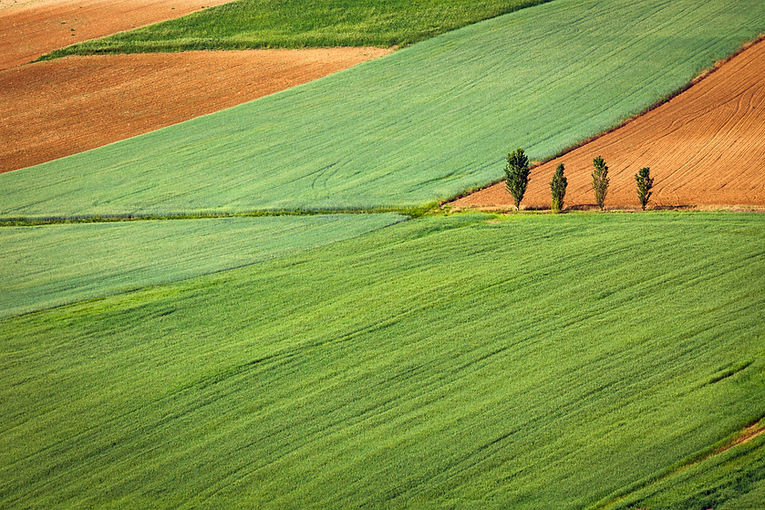
Automated field boundary detection using Sentinel-2 imagery shows how satellite data and technology are transforming agriculture. By analyzing images from space, systems can map farmland more accurately, helping improve planning, crop monitoring, and resource management.
For students, this topic connects to geography, technology, and data analysis. It demonstrates how tools like remote sensing combine science and innovation to solve real-world challenges in farming and sustainability.
With UNICCM School, learners can explore these subjects through structured online resources, building a strong foundation in both scientific concepts and modern technology applications.